
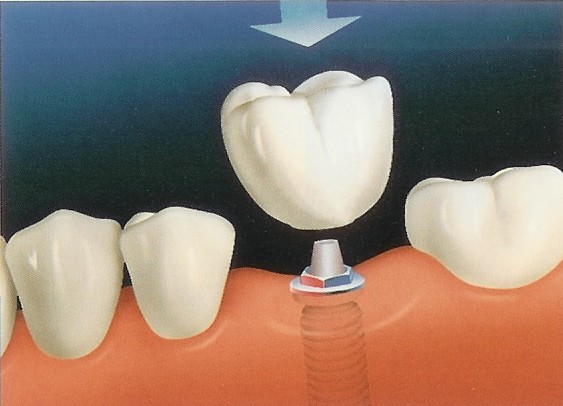
 A DENTAL IMPLANT is an artificial "tooth root" (preferably made of titanium) that is highly compatible with bone tissue and resistant to the effects of time. Modern implants retain their quality for many years. The durability of these dental implants often exceeds their intended lifespan.
Current experience in implantology allows us to confidently say that if a dental implant is properly selected, correctly placed, and used with care, it will function for many years. A screw-type dental implant resembles a screw at the root and is placed into a pre-drilled hole in the jawbone. One implant replaces one tooth. The titanium screw is embedded into the jawbone, providing a stable base for the crown. Titanium “roots” are extremely strong and, most importantly, do not cause allergic reactions in the human body.
Implant Manufacturing
Dental implants are manufactured using advanced technologies, with the main goal of improving the strength of the connection with the implant and reducing bone trauma. The surface of the screw implant is specially treated to increase its strength and reliability in the bone. This is done either through plasma-sprayed titanium or by bombarding the implant surface with titanium oxide microparticles. These treatments create microscopic roughness, which increases the implant's retention, as the bone securely attaches to these irregularities, effectively integrating the implant into the jaw.
How Is Dental Implantation Performed?
Dental implantation is performed in three stages. In the first stage, the screw implant is inserted into the jawbone, serving as the "root". Then comes the process of "osseointegration", during which the implant and bone fuse together. The dental implant becomes part of the jaw. In the final stage, a dental prosthesis is fabricated and attached to the titanium root.
How Many Implants Can Be Placed in the Jaw?
If the jaw is completely edentulous, 4 to 6 implants are typically placed. The procedure takes about an hour. If some teeth are still present, the surgeon determines the number of implants required. The operation is usually performed under local anesthesia, and patients can return home the same day.
An Implant Is More Than Just a Replacement!
Tooth loss reduces the mechanical load on the bone, which can lead to bone atrophy. This may result in facial wrinkles, sunken cheeks, and changes in facial contours. Implants help preserve jawbone integrity by providing necessary stimulation and maintaining bone volume. When replacing multiple missing teeth with a bridge, it often requires grinding down adjacent healthy teeth, compromising their longevity. Dental implants, by contrast, help preserve your natural teeth for years to come.
Dental Implantation
Modern dental implantation is a completely painless outpatient procedure, similar to tooth extraction or treatment. A dental implant is an artificial tooth root onto which a crown (the visible part of the tooth) is placed. Implants are also used to restore dental defects when one or all teeth are missing in the jaw. Titanium is used in implant manufacturing, providing biocompatibility and lightness.