
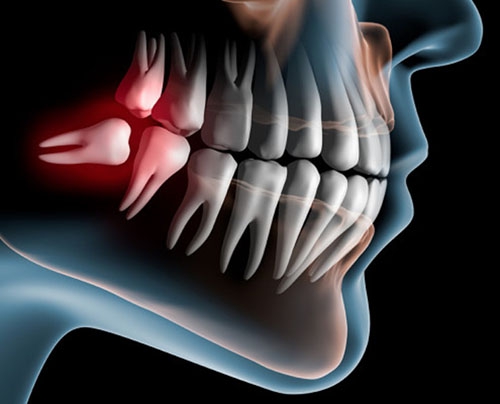
Sometimes we crave thrills and want to enjoy life, and sometimes we get a wisdom toothache. Since you're here, this has likely become a problem for you. But it's not all that bad — and in this article, we’ll explore why:
- Signs of wisdom tooth eruption
- Why a wisdom tooth hurts
- Why pain in the eighth tooth is a problem that needs to be addressed quickly
- Pain in an already erupted wisdom tooth
- What to do in this situation
So, the signs of wisdom tooth eruption:
- Swollen lymph nodes
- Pain while swallowing
- Swelling
- Itching or inflammation behind the last tooth
- Jaw pain
- Fever
- General malaise
By the way, wisdom teeth may never erupt at all, as this organ has lost its function due to evolution and is considered vestigial. Sometimes the tooth grows in correctly, in which case there is no pain or complications.
Why does a wisdom tooth hurt?
There can be several main causes:
Dystopia – the most common issue, where the wisdom tooth grows at an incorrect angle due to lack of space in the jaw. Our dentists pay special attention to dystopia and handle such cases with ease.
Retention – a condition where the tooth grows extremely slowly, often complicating treatment and the condition of the tooth.
Why you shouldn’t delay and should act as soon as possible:
The wisdom tooth is located in a hard-to-reach area, is not part of the “main team” of teeth, and is considered extra. Nature simply didn’t provide space for it — hence the problems and complications.
The growth process of a wisdom tooth can take anywhere from one month to two years.
The risk of complications increases with:
- Oral diseases
- Infection entering the tooth canals
- Cysts on the gums
The lower wisdom teeth usually cause the most trouble. The pain is typically aching and pressing — it can be very hard, sometimes nearly impossible, to tolerate.
The seriousness of the situation can often be measured by how sharply the tooth reacts to:
- Sour foods
- Heat
- Cold
- Chewing food
What to do in this situation:
Start by taking a pain reliever. If the pain is severe, ibuprofen is a great option.
In any case, see a dental specialist. Get a consultation, and together decide whether the tooth needs to be removed and how to proceed with treatment. The problem won’t go away on its own — it needs to be addressed as soon as possible.
Our specialists know exactly how to help. We will provide you with the right and timely care.
Take care of your health and don’t delay it.
Remember: dental problems don’t solve themselves — they only get worse.